WEDNESDAY, MARCH 18

11:00am – 3:30pm: INSTITUTES
1:00 – 4:00pm: HIV PCP INSTITUTE
1:00 – 5:00pm: HIV PNC INSTITUTE
4:00 – 5:30pm: TRACK SESSIONS

THURSDAY, MARCH 19

9:00 – 10:30am: PLENARY SESSION
10:45am – 12:15pm: TRACK SESSIONS
12:30 – 2:00pm: LUNCH PLENARY
2:15 – 3:45pm: TRACK SESSIONS
4:00 – 5:30pm: TRACK SESSIONS

FRIDAY, MARCH 20

9:00 – 10:30am: PLENARY SESSION
10:45am – 12:15pm: TRACK SESSIONS
12:30 – 2:00pm: LUNCH PLENARY

This schedule is preliminary and subject to change.

  • Beyond the Diagnosis: Building Systems for Healthy Aging with HIV

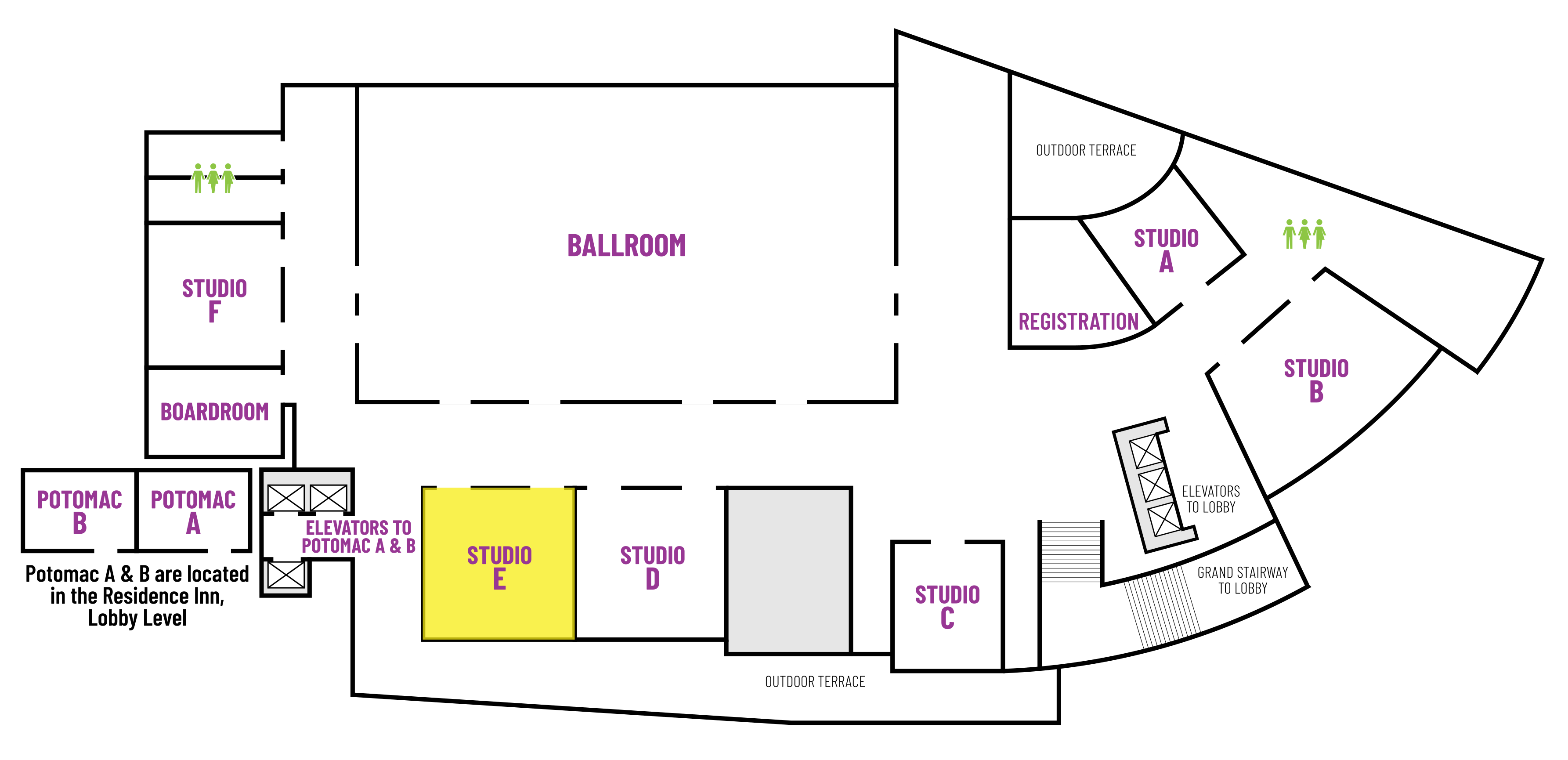
    Studio E

    Drawing from HealthHIV’s Fourth Annual State of Aging with HIV™ National Survey findings from consumers and the HIV workforce, the Institute explores how clinical realities and patient experience are shaped by current care system capacity, workforce readiness, and access conditions. It also considers how system conditions influence who delivers care and where gaps persist, reshaping the HIV workforce at a critical juncture.

  • The San Francisco Principles 2020: Centering Long-Term HIV Survivors in Research, Care, and Advocacy

    Studio E
    HIV Care and Treatment Track

    The San Francisco Principles 2020 builds on the 1983 Denver Principles to highlight the critical needs of long-term HIV/AIDS survivors (LTS) as they age with HIV. This important statement brings attention to the linked problems of aging, unfair health access, and how systems often ignore marginalized people within the LTS community.

  • Beyond Narcan: A Black Health Equity Approach to Opioid Capacity Building in Washington, DC

    Studio E
    Drug User Health Track

    Us Helping Us, People Into Living, Inc., a Black-led, LGBTQ+-affirming health organization in Washington, DC, developed a harm reduction and capacity-building model rooted in health equity to address the opioid crisis. While naloxone distribution remains vital, we go beyond it by centering legal literacy, reducing stigma, and community empowerment.

  • Integrating Harm Reduction into Primary Care

    Studio E
    Drug User Health Track

    Integrating harm reduction conversations into primary care visits can help to provide education, resources, and support for behavioral change for the patient, their family, and their community. Patients are already considering their safety related to substance use and pain control but may not know all the facts or strategies to keep themselves and their loved ones safe. Asking patients without judgment about how they control pain and use substances can open communication between patients and healthcare providers.

  • Radical Rapport: Trauma-Informed and Culturally Rooted Harm Reduction

    Studio E
    Drug User Health Track

    Radical Rapport is a dynamic, trauma-informed training/presentation designed to help harm reduction providers and health professionals build deeper trust with Black, Brown, Indigenous and LGBTQ+ communities. Through reflection, skill-building, and cultural humility, Dr. Vivid guides participants toward creating safer spaces rooted in affirmation, not assumption. This training centers identity, orientation, expression, plant medicine, and spiritual healing as vital to holistic harm reduction.

  • A Group Level Approach to Reduce HIV and STIs in Women of Color Residing in Low-Income and Transitional Housing in the Urban South

    Studio E
    HIV Prevention Track

    Power of PreventionBlack women at are increased risk HIV of infection compared to women in general. In 2022 in Alabama, over half of HIV people living with HIV were Black, almost a quarter were women, and 1 in 5 were unaware of their status. This data supports a need for HIV prevention interventions among youth and adults in the state.

  • Building Trust Through Culture: Vivent Health and the Ballroom Scene’s Role in Advancing PrEP Uptake

    Studio E
    HIV Prevention Track

    Power of PreventionThis session explores how cultural competency and community-based participatory practice (CBPP) models are being implemented to center community voices and ensure public health interventions are both relevant and affirming. Strategies include peer-led engagement, wellness-themed mini-balls, and house-based dialogues that allow for honest conversations around HIV, stigma, and care. Participants will be introduced to the CBPP model and the Cultural Competence Continuum as guiding frameworks for equity-driven outreach.

  • Powering Change: Community Engagement Strategies to End the HIV Epidemic in the U.S. South

    Studio E
    HIV Prevention Track

    Power of PreventionThis session will share retrospective results from SHIF’s 8 Year history, as well as SHIF’s community engagement strategies, developed to intentionally address the common mismatch between public health programs and community needs that often hamper impact. This session will both describe SHIF’s robust community engagement strategies, as well as recommendations to adapt such strategies for similar programming.

  • A Simulation Exercise to Improve Sexual Health and Wellness Training for Nurse Practitioner Students

    Studio E
    HIV Prevention Track

    Power of PreventionEvidence shows there are gaps in clinicians’ skills in providing comprehensive sexual health care across diverse populations. Simulation in clinical training has emerged as an effective pedagogy to facilitate student learning of knowledge, skills, and attitudes on a variety of healthcare topics. Faculty at the University of Rochester School of Nursing developed a sexual health simulation for three graduate nurse practitioner (NP) programs (Adult-Gerontology, Family, and Pediatric Primary Care).

  • Blueprint for Expanding HIV Testing in Your Community

    Studio E
    HIV Prevention Track

    Power of PreventionThis presentation will highlight how to build a successful HIV testing program in the community. These are not abstract methods, but concrete steps to provide a clear plan on creating an HIV testing program that will ensure more people will have access to free, rapid testing.

  • Developing Linkage to Comprehensive Prevention Services in an Emergency Department Setting

    Studio E
    HIV Prevention Track

    Power of PreventionThis presentation will discuss the opportunities for implementing linkage to comprehensive services by assessing populations who are seen in the ED testing for STIs, including syphilis and HIV. We will explore the operations of identifying eligible patients, including our collaborations with the public health department, our Infectious Disease Clinic, and our Title V Clinic. We will highlight what is going well and discuss areas of improvement.
    This presentation will also review the successes and challenges of launching a rapid PrEP program in an ED setting.

  • Integration Pre-Exposure Prophylaxis in Emergency Medicine: A Single-Center Model at Tampa General Hospital

    Studio E
    HIV Prevention Track

    Power of PreventionAs part of the Hillsborough Health Equity Plan, a formative research initiative was conducted to increase the uptake of pre-exposure prophylaxis (PrEP) among Black and Latinx men who have sex with men (MSM) aged 25–34 in Hillsborough County, Florida. The study explored patient and provider experiences within on-demand care settings, such as urgent care clinics and emergency departments (EDs), where opportunities for PrEP intervention are often missed.

  • Frequent Participation in Ryan White Services Improves Time to HIV Viral Suppression Among Persons with HIV Monoinfection and Persons with HIV and HCV Coinfection in Philadelphia

    Studio E
    HIV Care and Treatment Track

    Hepatitis C virus (HCV) coinfection is associated with poor health outcomes for persons with HIV (PWH). Although higher HIV viral suppression rates have been reported among PWH who participate in Ryan White services, studies have not assessed effects on HCV coinfection.

  • Public-Private Partnerships: A Cost-Saving Model to Efficiently End Multiple Public Health Epidemics

    Studio E
    HIV Prevention Track

    Power of PreventionCongenital syphilis is a completely preventable condition that imposes a significant clinical and financial burden on our current strained healthcare system. In response to rising infection rates in Miami-Dade County, Homestead Hospital (HH) implemented an innovative, Electronic Health Record-integrated Syphilis Screening Algorithm in 2019, embedded within its existing routine HIV and Hepatitis C testing infrastructure.

  • Design and Early Findings from the Empower Theater Arts Peer Educator Program

    Studio E
    HIV Prevention Track

    Power of PreventionWhile a myriad of health education and prevention programs exist in the community and on HBCU college campuses, most women are unaware of these resources and, most importantly, the availability and effectiveness of pre-exposure prophylaxis (PrEP), despite being at greater risk of HIV. Black Women and HIV: Empowerment through Engagement, Education, and Enrichment (“Empower”) is an HBCU led, collaborative, multi-year initiative committed to advancing HIV prevention and sexual health among Black women by implementing culturally responsive education and community engagement.

  • AI Ready: Establishing a Responsible and Practical Approach to Artificial Intelligence in HIV Care and Prevention

    Studio E
    HIV Prevention Track

    Power of PreventionMany healthcare organizations are exploring the use of artificial intelligence to improve care and streamline operations but often face uncertainty about how to begin. This session provides a clear and practical entry point for HIV service systems that want to integrate AI responsibly, particularly those working with limited resources.

  • Threats to Reduce STI and HIV Prevention Funding: An Analysis of the Immediate Effects on Partner Services at the Houston Health Department

    Studio E
    HIV Prevention Track

    Power of PreventionScaling back HIV and STI federal funds undermines decades of progress made in the public health realm. Domestic HIV and STI Prevention programs aim to provide essential services such as testing, treatment and education, to help decrease transmission of infectious diseases and improve health outcomes in the local communities. The Houston Health Department (HHD) relies mostly on federal grants to support staffing, infrastructure and preventative services. The Partner Services program is especially crucial for contact tracing to prevent further spread of disease by tracking partners of individuals potentially infected with syphilis and HIV. HHD assessed the Partner Services program’s performance levels to determine if uncertainty in receiving federal funds, which potentially contributed to a significant reduction in workforce, had negatively impacted Public Health Follow Up (PHFU) activities.

  • The Provision of STI Education and HIV Testing among Incarcerated Youth in Alabama

    Studio E
    HIV Prevention Track

    Power of PreventionIn 2022 in Alabama, youth age 13-24 made up the majority of chlamydia and gonorrhea cases, and nearly a quarter of new HIV diagnoses, illustrating the need for STI prevention efforts aimed at this population. Incarcerated youth represent a group more vulnerable to HIV/STI infection than youth in general. The UAB Family Clinic has partnered with the Alabama Department of Youth Services to provide HIV/STI education confidential HIV testing to youth held in detention facilities across the state of Alabama. In 2024, the UAB Family Clinic provided comprehensive HIV/STI education to approximately 350 youth across 3 sites, 268 of whom opted to be tested for HIV.

Accreditation, Credit, and Support

Information on credits offered to SYNC participants for attending institutes, sessions, and plenaries — live or in-person — is available here.

Commercial Support Acknowledgement

This conference is supported, in part, by independent educational grants from ineligible companies. A full list of supporters is available here. All accredited content has been developed and delivered in accordance with the ACCME Standards for Integrity and Independence and the criteria of Joint Accreditation for Interprofessional Continuing Education™, and is free of commercial bias.