




Abstract submissions are now open
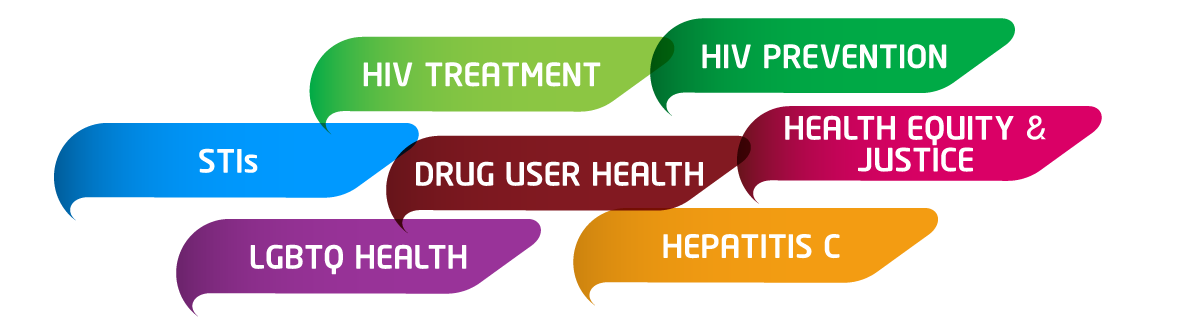
SYNC 2027, the national conference on HIV, HCV, STI, drug user, and LGBTQ health, will be held June 2-4, 2027, at the Renaissance Arlington Capital View Hotel in Arlington, Virginia.
We encourage you to submit an abstract on program innovations, emerging issues, clinical challenges, research findings, quality improvement initiatives, best practices, or innovative tools and approaches. SYNC offers multidisciplinary, intersectional content for diverse providers and settings, and welcomes submissions from all areas of the field.
We are especially interested in receiving abstracts that explore the intersection of two or more of these topics/disciplines and their impact on health equity in minority and underserved communities, as well as approaches that SYNChronize efforts to address this impact. Abstracts can highlight education, programs, practice innovations, policy, or research. This approach breaks down traditional silos in healthcare research and policy-making, supporting multifaceted strategies for the syndemic health challenges diverse populations face.
Abstract Submission Portal
Create your account, complete your profile, and submit your abstract here.
Get StartedKey Dates
- November 3, 2026 – Abstract submissions open
- December 14, 2026 – Submission deadline
- January 2027 – Acceptance notifications
ABSTRACT TOPICS/DISCIPLINES
Category/Types

Capacity Building

Education & Training

Community Engagement

Technology & Artificial Intelligence
Health Services Research

Health Advocacy & Policy

Health Communications & Marketing

Prevention & Testing
Treatment & Clinical Updates

Care Coordination & Service Delivery

Youth & Adolescent Health
Presentation Types

Oral Presentation
Oral presentations are part of track sessions with other presentations, grouped by common topic. (20 minutes)

Poster Presentation
Specific guidelines for poster presentations will be provided upon acceptance. (In person)
Podcast
A conversation-style podcast guided by a host or hosts, often featuring a guest speaker or panel. (30 minutes)
Skills-building Workshop
Interactive, hands-on session focused on building skills that drive synchronicity in healthcare. (30 or 60 minutes)
Submitting Your Abstract
- Create an Account: Fill in your contact profile to gain access to the abstract submission tabs.
- Abstract Title: Please use title case.
- Abstract Description: 250 words max. Description will be displayed to conference attendees.
- Abstract Sections: Please keep sections concise out of consideration for reviewers.
- Presentation Type Preference: Select your preferred presentation format. The Planning Committee will make all final presentation assignments.
- Topic/Discipline: Select all topics/disciplines that apply.
- Category/Type: You may select more than one category.
- Author Information: Presenting and contributing authors will receive authorship credit.
- Conflict of Interest (COI) Forms: A COI form for presenters and authors, completed through the shared Adobe Sign link the submitting author passes along.
Submission Requirements
- Abstracts must be submitted through the online portal; previously published abstracts are eligible.
- The submitter must have permission from all authors to submit and publish if selected.
- If your presentation is a sales presentation or promotional pitch, please contact Michele McDermott at [email protected] for more information.
- All presentations must meet continuing education standards — if yours may not, contact Michele McDermott at [email protected] before submitting.
- Supplemental materials may be uploaded, and you will receive an email confirmation upon successful submission.
- Questions? Contact Michele McDermott at [email protected].
How to Approach Your Abstract: SYNCing Across Disciplines
SYNC is built on multi-disciplinary, intersectional content, and we encourage abstracts that connect two or more topics/disciplines. When you submit, select all that apply.
We also encourage presenters, where applicable, to consider interconnected lenses when shaping a submission (examples):
SYNCing Practice and Program Implementation
- Background: What conditions or service gaps prompted your agency to create a new intervention, service model, or operational change, and what theory, framework, or evidence base informed it, if applicable?
- Methods: What did you put in place, how did the theoretical or conceptual approach guide its design and implementation, and which staff, partners, and community members were involved?
- Results: What outcomes did you expect, and what did you observe?
- Conclusions: What do the results mean for your organization and the field?
SYNCing Systems and Policy Conditions
- Background: What funding, coverage, and federal, state, or local allocation policies, along with partnerships, workforce capacity, and administrative decisions, shaped the setting for this work?
- Methods: How did your agency assess these conditions (for example, using an implementation science or policy framework), and how did it respond when they shifted during implementation?
- Results: Which conditions supported the work, and which undermined it?
- Conclusions: What systems or policy changes would help the work continue or expand?
SYNCing Outcomes, Learning, and Real-World Adaptability
- Background: Which people and communities did the work serve, and what needs or disparities did it address?
- Methods: What data, evaluation approach or framework (such as RE-AIM), or documented experience did you use to measure change?
- Results: What changed for the people and communities served, and what did not work as planned?
- Conclusions: What could another program, agency, or state adapt, and what would it need to do so?