WEDNESDAY, MARCH 18

11:00am – 3:30pm: INSTITUTES
1:00 – 4:00pm: HIV PCP INSTITUTE
1:00 – 5:00pm: HIV PNC INSTITUTE
4:00 – 5:30pm: TRACK SESSIONS

THURSDAY, MARCH 19

9:00 – 10:30am: PLENARY SESSION
10:45am – 12:15pm: TRACK SESSIONS
12:30 – 2:00pm: LUNCH PLENARY
2:15 – 3:45pm: TRACK SESSIONS
4:00 – 5:30pm: TRACK SESSIONS

FRIDAY, MARCH 20

9:00 – 10:30am: PLENARY SESSION
10:45am – 12:15pm: TRACK SESSIONS
12:30 – 2:00pm: LUNCH PLENARY

This schedule is preliminary and subject to change.

  • PrEP, PEP & Pleasure: Tools of Sexual Liberation

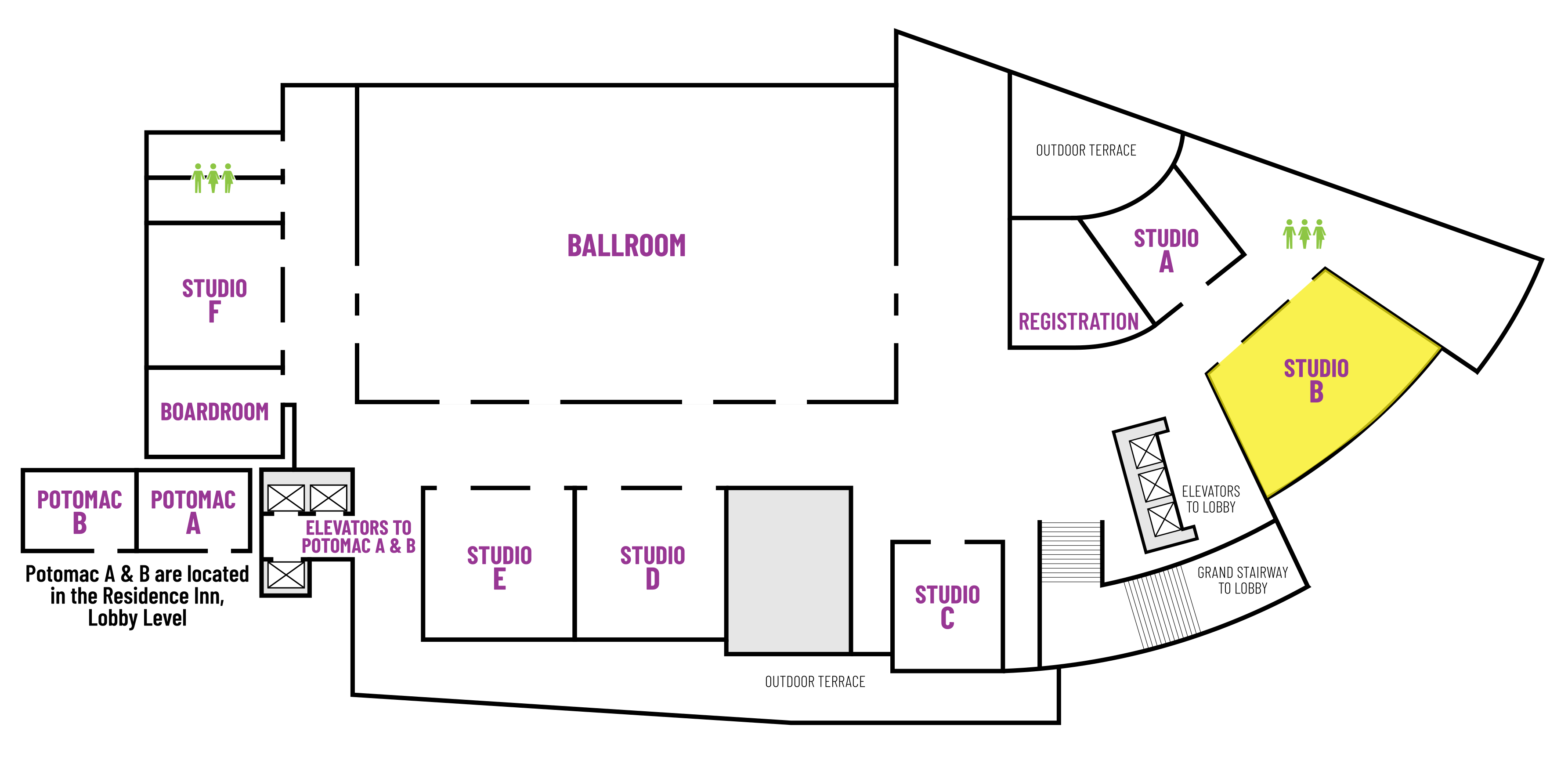
    Studio B
    HIV Prevention Track

    Power of PreventionThis interactive presentation explores the intersection of sexual pleasure, HIV prevention, and liberation for communities of color. The Science of Sexuality and Pleasure, it reframes PrEP and PEP not just as biomedical tools, but as instruments of sexual agency, protection, and empowerment. Drawing on the imagery of chains, whips, handcuffs, and doxycycline, we assert that protection and pleasure are not mutually exclusive, but deeply intertwined. Through storytelling, case-based dialogue, and visual metaphors, we invite attendees to challenge conventional narratives that separate safety from desire.

  • From Cell to Clinic: Connecting Returning Citizens to HIV Prevention and Care

    Studio B
    HIV Prevention Track

    Power of PreventionImagine a world where every individual, regardless of their past, has access to essential healthcare services and the support they need to thrive. For returning citizens living with HIV, this is not just a dream—it’s a necessity. The Intervention Services Program (ISP), part of the DC Health’s HIV AIDS Hepatitis STD Tuberculosis Administration (HAHSTA), is on a mission to transform this vision into reality.

  • Understanding the Facilitators of and Barriers to Community Engagement Among Faith-Based Organizations in New York City

    Studio B
    HIV Prevention Track

    Power of PreventionBlack Health’s Outreach Enhancement: Faith Based Organization Program (OEF) collaborates with faith-based organizations across the five boroughs of New York City to provide high impact HIV prevention services in geographical hot spots in communities of color where HIV infections are most heavily concentrated (as defined by the New York City Department of Health and Mental Hygiene (NYCDOHMH).

  • Critical Thinking and Cultural Affirmation (CTCA) Intervention

    Studio B
    Health Equity Track

    This session explores how CTCA blends peer-led support, expressive arts, cultural rituals, and critical consciousness to foster emotional wellness, increase HIV care retention, and support prevention. Participants will engage with evidence-based strategies and real-world examples demonstrating CTCA’s success in improving health outcomes while affirming identity and restoring community connection.

  • I’m Not a Monster: Examining Media Bias and Stigma in Florida News Coverage of HIV-related Arrests

    Studio B
    Health Equity Track

    This study examines media bias and stigma in Florida news coverage of HIV-related arrests from 2010 to 2020. A systematic content analysis of 129 news articles revealed disproportionate racial and gender portrayals, with Black men overrepresented as perpetrators despite data showing White women constitute the majority of those arrested. Findings indicate widespread use of stigmatizing language and sensationalized reporting, which amplify public misconceptions about HIV transmission and criminalization.

  • The Association of Insurance Type with Use of Emergency Care in New York

    Studio B

    In New York, avoidable emergency department (ED) visits—non-emergent care that could be managed in primary care—remain common, with an estimated 40% of ED visits classified as avoidable in 2024. These visits contribute to ED overcrowding, higher costs, workforce strain, and longer wait times that can worsen outcomes for time-sensitive conditions. Barriers to timely primary care, which vary by insurance type, may drive these patterns of avoidable ED use. In this study, we examined the association between insurance type and avoidable ED visits in New York, hypothesizing that such visits are more common among patients with public insurance or who are uninsured than among those with private coverage.

  • Too Big To Fail: What’s Next for the Federal Drug Pricing Program?

    Studio B

    This session features the ADAP Advocacy Association's 340B Patient Advisory Committee convening its first meeting of the year, featuring Dr. Rory Martin of IQVIA sharing his perspectives on the 340B Drug Pricing Program. The 340B Program has increasingly been targeted for reform by lawmakers at the federal and state levels, and by the Trump Administration's push to move the program to a rebate payment model. The 340B Patient Advisory Committee will convene its next meeting during SYNC to discuss ongoing executive orders, administrative rules, legislation, and pending litigation in numerous federal district courts and appellate courts.

  • High Retention and Acceptability of Long-Acting Injectable PrEP among Underserved Urban Populations: Findings from a Community-Based Health Center in Newark, NJ.

    Studio B
    HIV Prevention Track

    Power of PreventionThe North Jersey Community Research Initiative (NJCRI) conducted a retrospective chart review to evaluate real-world utilization of oral and long-acting injectable PrEP (LA-Cabotegravir) among individuals accessing services between 2024 and 2025. NJCRI serves a predominantly Black and Brown, urban population in Newark, NJ, many of whom face housing instability, food insecurity, and limited access to affirming healthcare.

  • Learning Across Borders: What the U.S. Can Learn from LMIC Contraceptive Rollouts for Injectable PrEP Implementation

    Studio B
    HIV Prevention Track

    Power of PreventionThe U.S. has approved long-acting injectable PrEP options such as cabotegravir (Apretude) and lenacapavir (Yzugo), yet major challenges remain around equitable access, demand generation, and health-system readiness. This project explores what the United States can learn from low- and middle-income countries (LMICs) that successfully expanded injectable contraceptives, an intervention with striking parallels to injectable PrEP.

  • Linking Syphilis Surveillance to HIV Prevention: A Workflow Model to Promote PrEP Uptake in Marginalized Communities in Texas

    Studio B
    HIV Prevention Track

    Power of PreventionSince 2018, Texas has faced a steep rise in syphilis cases particularly among marginalized groups such as Hispanic and non-Hispanic Black individuals. These findings are parallel to HIV trends in Texas. This model merges surveillance with proactive prevention and clinical coordination, targeting individuals at heightened HIV risk. Ongoing data collection on patient demographics, barriers, and facilitators will optimize implementation and elevate prevention outcomes in underserved communities.

  • Scaling PrEP in Women’s Health: Findings from a Pilot on OBGYN Practices in Mississippi

    Studio B
    HIV Prevention Track

    Power of PreventionStrengthening OBGYN capacity to integrate PrEP into routine care is critical to reducing HIV incidence and advancing health equity for Black women in Mississippi. Findings will guide a forthcoming statewide, grant-funded initiative to scale PrEP delivery in women’s health settings, supporting the Ending the HIV Epidemic Initiative’s goals and addressing persistent disparities in HIV prevention access and outcomes.

  • The Future is Gray and Gay: Building Inclusive HIV Systems for LGBTQ+ Older Adults

    Studio B
    HIV Care and Treatment Track

    Holy Cross Health in Broward County, Florida, has developed a comprehensive, community-embedded care model that integrates HIV treatment with aging services, behavioral health, and chronic disease management. This peer- and community health worker–led, equity-focused approach is designed to address disparities among LGBTQ+ individuals, people of color, and those experiencing economic hardship. The model emphasizes cultural humility, trauma-informed care, and whole-person wellness. This session will explore how this integrated framework improves outcomes and offers a scalable solution for reimagining HIV care for aging LGBTQ+ populations.

  • Aging Adolescents and Young Adults with HIV: Navigating the Second Transition in HIV Care

    Studio B
    HIV Care and Treatment Track

    Having previously reported on clinical outcomes of Adolescents and Young Adults with HIV (AYAHIV) in the Accessing Care Early (ACE) young adult transition program, we present an update, detailing the design and implementation of this multi-dimensional program, the innovations in biomedical and care delivery interventions, as well as programmatic challenges and opportunities as we evolve into a mature transition program. This workshop will use didactics and interactive presentation, case-study, transparent panel discussion and Q&A as participants engage with the ACE program’s multidisciplinary team, including an YAHIV who “came of age” in the program.

  • Aging While Black and LGBTQ+/SGL: Legacy, Equity, and the HIV Long-Term Survivor Experience

    Studio B
    HIV Care and Treatment Track

    This interactive session explores the intersection of aging, race, gender identity, and sexuality through the lens of Black LGBTQ+/SGL individuals living with HIV. Drawing from lived experiences and frameworks like Aging While Black by Raymond Jetson, the session redefines aging not as decline, but as a site for power, healing, and systemic transformation.

Accreditation, Credit, and Support

Information on credits offered to SYNC participants for attending institutes, sessions, and plenaries — live or in-person — is available here.

Commercial Support Acknowledgement

This conference is supported, in part, by independent educational grants from ineligible companies. A full list of supporters is available here. All accredited content has been developed and delivered in accordance with the ACCME Standards for Integrity and Independence and the criteria of Joint Accreditation for Interprofessional Continuing Education™, and is free of commercial bias.