WEDNESDAY, MARCH 18

11:00am – 3:30pm: INSTITUTES
1:00 – 4:00pm: HIV PCP INSTITUTE
1:00 – 5:00pm: HIV PNC INSTITUTE
4:00 – 5:30pm: TRACK SESSIONS

THURSDAY, MARCH 19

9:00 – 10:30am: PLENARY SESSION
10:45am – 12:15pm: TRACK SESSIONS
12:30 – 2:00pm: LUNCH PLENARY
2:15 – 3:45pm: TRACK SESSIONS
4:00 – 5:30pm: TRACK SESSIONS

FRIDAY, MARCH 20

9:00 – 10:30am: PLENARY SESSION
10:45am – 12:15pm: TRACK SESSIONS
12:30 – 2:00pm: LUNCH PLENARY

This schedule is preliminary and subject to change.

  • Have GOOD Sex: Promoting Sex Positivity, Empowerment, and Inclusivity with Community Engagement for Home-Based HIV Testing

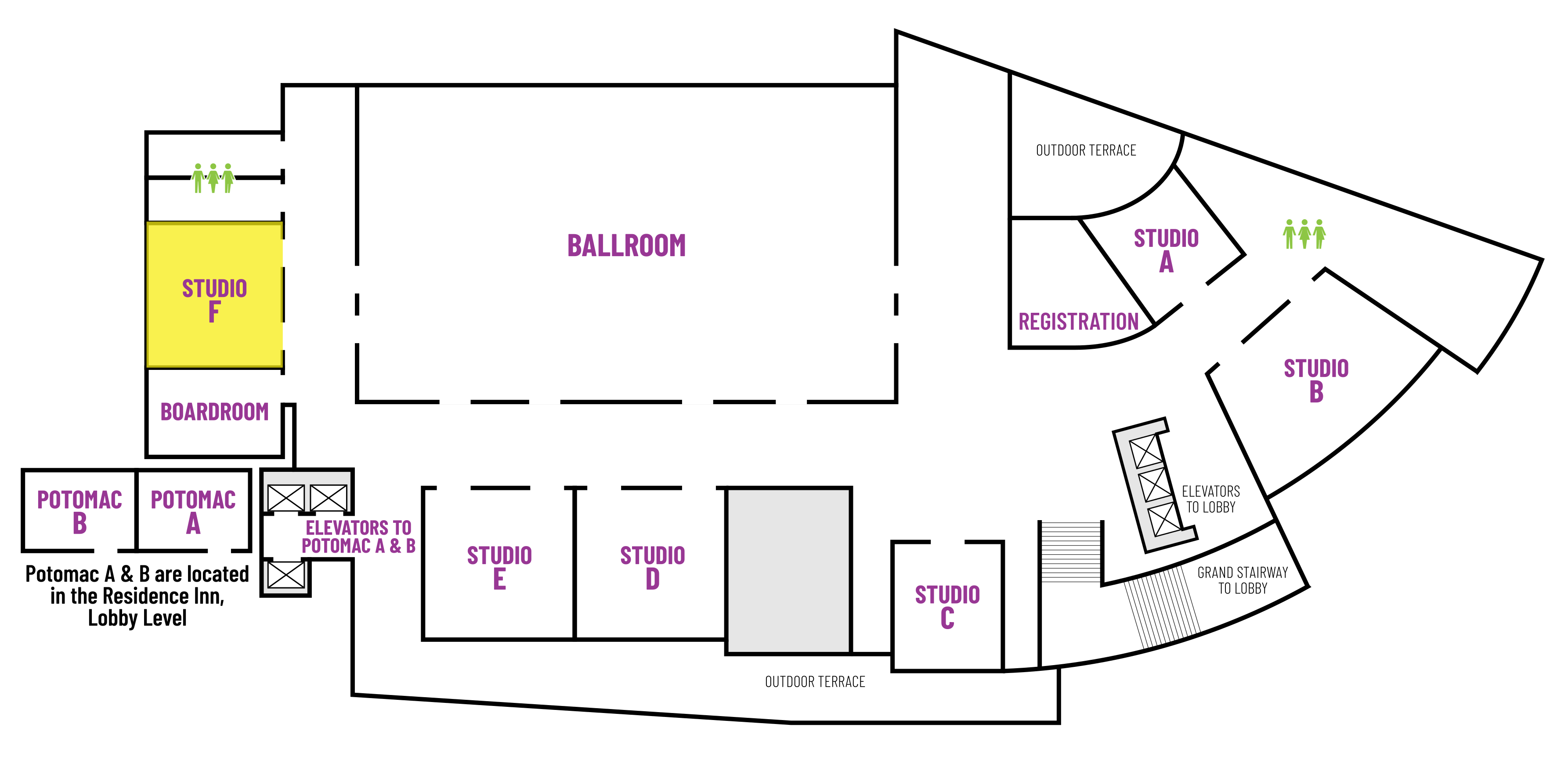
    Studio F
    HIV Prevention Track

    Power of PreventionThis session explores how sex-positive, pleasure-centered approaches enhance HIV and STI prevention – especially for people living with HIV and communities greatly impacted by HIV. We discuss the benefits of this approach and highlight an innovative initiative based in community voices and engagement: San Francisco Department of Public Health (SFDPH)’s Have Good Sex campaign, which promotes sexual empowerment, inclusivity, and self-directed care through home-based testing. Centering the needs of communities disproportionately impacted by HIV, this program affirms sexual health and well-being through messaging that centers pleasure and autonomy.

  • Reaching the Unreachable: Strategic Street Outreach for HIV Prevention and Treatment

    Studio F
    HIV Prevention Track

    Power of PreventionThis presentation will provide an in-depth overview of our agency’s innovative street outreach strategies for HIV prevention and treatment across Texas. We focus on connecting with populations often labeled as “hard to reach” through a combination of trauma-informed care and peer navigation, designed to foster trust and engagement. Our approach prioritizes immediacy—once we identify individuals in need, we work to link them to HIV care or initiate PrEP within 24 hours, and often on the same day. We are leading the effort for prompt diagnosis and linkage to care in Texas when individuals in many areas have to wait days, even weeks, for a doctor's appointment.

  • Building Bridges: A Community-Based Institution’s PrEP Program Success Story

    Studio F
    HIV Prevention Track

    Power of PreventionThis session explores the experience of Us Helping Us while equipping participants with the tools and strategies to overcome barriers to HIV prevention by developing effective, community-centered PrEP services. Facilitators will guide attendees through experiential learning and hands-on activities, demonstrating how to establish partnerships, develop tailored PrEP protocols, and address common challenges such as client engagement, stigma, and resource constraints in a resource-limited setting. By the end of this interactive session, participants will be prepared to transform their respective organizations into a "one-stop shop" that eliminates access barriers and contributes to the goal of ending the HIV epidemic by 2030.

  • Bridging the Gap Between Medical and Homeless Services through Patient Navigation: The NYU Langone Community Medicine Program Model

    Studio F
    HIV Prevention Track

    Power of PreventionIn 2023, 1,686 people were newly diagnosed with HIV in New York City, with Brooklyn reporting the highest rate and 19% concurrent AIDS diagnoses. To address these disparities, the NYU Langone Family Health Centers’ Community Medicine Program (CMP)—a collaboration with the NYC shelter system—integrated medical services directly within shelters to improve outcomes among unstably housed individuals. After piloting a part-time patient navigator to support HIV-positive patients with linkage and retention in care, the program demonstrated early success and secured a grant in December 2024 to expand into a status-neutral navigation model.

  • Intercourse: Sex Ed for Congress

    Studio F
    HIV Prevention Track

    Power of PreventionThis presentation provides an update on federal reproductive healthcare and access litigation and policy, and highlights strategies for systems change, including policy reforms, advocacy, research, collaboration, and capacity-building to address the implications of unequal access to sex education.

  • Making the Uncomfortable Routine: Transforming Sexual Health Conversations in Rural Settings

    Studio F
    HIV Prevention Track

    Power of PreventionParticipants will learn “how-to” techniques for initiating and guiding conversations about sexual history through a lens of prevention, risk reduction, and patient-centered care. The presentation will emphasize creating a safe, respectful, and non-judgmental environment that encourages patients to ask questions and engage openly. Special attention will be given to the unique challenges faced in rural communities, where stigma, limited resources, and lack of formal education can further inhibit discussions about sexual health.

  • Implementation of Routine Opt-Out HIV Testing across the University of California-San Diego Health Systems

    Studio F
    HIV Prevention Track

    Power of PreventionIn 2006, the CDC shared revised guidance recommending HIV testing be provided to individuals 13-64 years of age, regardless of risk, in all health-care settings unless patients opt out of the service. This approach, known as Routine Opt-Out HIV Testing (ROOT), is key in identifying persons with undiagnosed HIV, persons previously testing positive but not engaged in HIV care or virally suppressed, and persons testing negative that could be referred to preventative services.

  • Beyond the Clinic: How Holy Cross Health is Transforming LGBTQ+ Health Through Outreach and Advocacy

    Studio F
    LGBTQ Health Track

    Holy Cross Health in Fort Lauderdale, Florida, is advancing health equity through a comprehensive, community-based approach to HIV prevention and care, STI and Hepatitis C screening, and LGBTQ+ health. Broward County remains one of the nation’s HIV epicenters, with 579 new diagnoses in 2022, far exceeding the national average. Despite this, 96.2 percent of people living with HIV in the county know their status, and 80.8 percent are linked to care within one month. Holy Cross Health’s initiatives, such as community outreach, HIV self-testing, and culturally competent education, are designed to meet the needs of LGBTQ+ individuals who are disproportionately affected by these conditions. The program is led by community advocates and LGBTQ+ healthcare professionals who step beyond traditional clinical roles to engage directly with the community. This session will explore the program’s design, implementation, and measurable impact, offering a replicable model for other health systems.

  • LGBTQIA+ Health and Community Engagement in a Politically Charged Climate

    Studio F
    LGBTQ Health Track

    This presentation explores strategies for effective LGBTQIA+ health promotion and community engagement amid a shifting sociopolitical landscape. Drawing on recent case studies, grassroots initiatives, and community-led research, we examine the ways in which LGBTQIA+ individuals and organizations are responding to policy rollbacks and social hostility. We highlight inclusive health interventions, mutual aid networks, and coalition-building as mechanisms for advocacy and care.

  • The Future is Gray and Gay: Building Inclusive HIV Systems for LGBTQ+ Older Adults

    Studio F
    HIV Care and Treatment Track

    Holy Cross Health in Broward County, Florida, has developed a comprehensive, community-embedded care model that integrates HIV treatment with aging services, behavioral health, and chronic disease management. This peer- and community health worker–led, equity-focused approach is designed to address disparities among LGBTQ+ individuals, people of color, and those experiencing economic hardship. The model emphasizes cultural humility, trauma-informed care, and whole-person wellness. This session will explore how this integrated framework improves outcomes and offers a scalable solution for reimagining HIV care for aging LGBTQ+ populations.

  • Justice Is the Intervention: Redesigning Harm Reduction within Black Communities

    Studio F
    HIV Care and Treatment Track

    The decline in drug-related fatalities in New Jersey over the past three years reflects progress in harm reduction, yet racial disparities remain stark. Black and Hispanic communities continue to face disproportionate rates of drug-related deaths—51.4 and 38.9 per 100,000, respectively—compared to white residents. The Black Lives Matter Paterson Harm Reduction Center and Mobile Unit provides resources, care, and support to neglected populations through culturally responsive, Black-centered mobile outreach.

  • HIV and Cognitive Decline: Understanding HIV-Associated Neurocognitive Disorder

    Studio F
    HIV Care and Treatment Track

    With advancements in HIV treatment, individuals living with HIV are now living longer, By 2030, 70% of people living with HIV (PLWH) will be ages 50 and older. But, as PLWH age they face unique challenges, particularly with cognitive health. One major concern is HIV-Associated Neurocognitive Disorder (HAND), a form of cognitive decline more common among PLWH. This presentation will provide a brief overview of HIV care; the signs and risk factors for HAND; similarities and differences between HAND and Alzheimer's disease; and why accurately diagnosing cognitive change in PLWH is so important.

  • Navigating HIV in Pregnancy: Clinical Scenarios and Guideline-Based Management for Infants and Pregnant People

    Studio F
    HIV Care and Treatment Track

    This presentation will explore critical considerations in the management of HIV in the context of pregnancy, focusing on evidence-based practices and clinical guidelines. Divided into three clinically relevant scenarios, the session will address: (1) treatment and monitoring of HIV in pregnant individuals, (2) postnatal management of infants with in utero exposure to HIV, and (3) considerations for HIV-positive parents who plan to breastfeed. Each topic will be anchored by a clinical case, offering participants an opportunity to apply current guidelines. Emphasis will be placed on reducing risk of perinatal HIV transmission, optimizing maternal and infant outcomes, and navigating ethical and cultural factors in decision making. Attendees will leave with practical clinical pearls and an updated understanding of best practices in HIV care during pregnancy and the postpartum period.

Accreditation, Credit, and Support

Information on credits offered to SYNC participants for attending institutes, sessions, and plenaries — live or in-person — is available here.

Commercial Support Acknowledgement

This conference is supported, in part, by independent educational grants from ineligible companies. A full list of supporters is available here. All accredited content has been developed and delivered in accordance with the ACCME Standards for Integrity and Independence and the criteria of Joint Accreditation for Interprofessional Continuing Education™, and is free of commercial bias.