WEDNESDAY, MARCH 18

11:00am – 3:30pm: INSTITUTES
1:00 – 4:00pm: HIV PCP INSTITUTE
1:00 – 5:00pm: HIV PNC INSTITUTE
4:00 – 5:30pm: TRACK SESSIONS

THURSDAY, MARCH 19

9:00 – 10:30am: PLENARY SESSION
10:45am – 12:15pm: TRACK SESSIONS
12:30 – 2:00pm: LUNCH PLENARY
2:15 – 3:45pm: TRACK SESSIONS
4:00 – 5:30pm: TRACK SESSIONS

FRIDAY, MARCH 20

9:00 – 10:30am: PLENARY SESSION
10:45am – 12:15pm: TRACK SESSIONS
12:30 – 2:00pm: LUNCH PLENARY

This schedule is preliminary and subject to change.

  • Expanding the National HIV Prevention Workforce through Certification

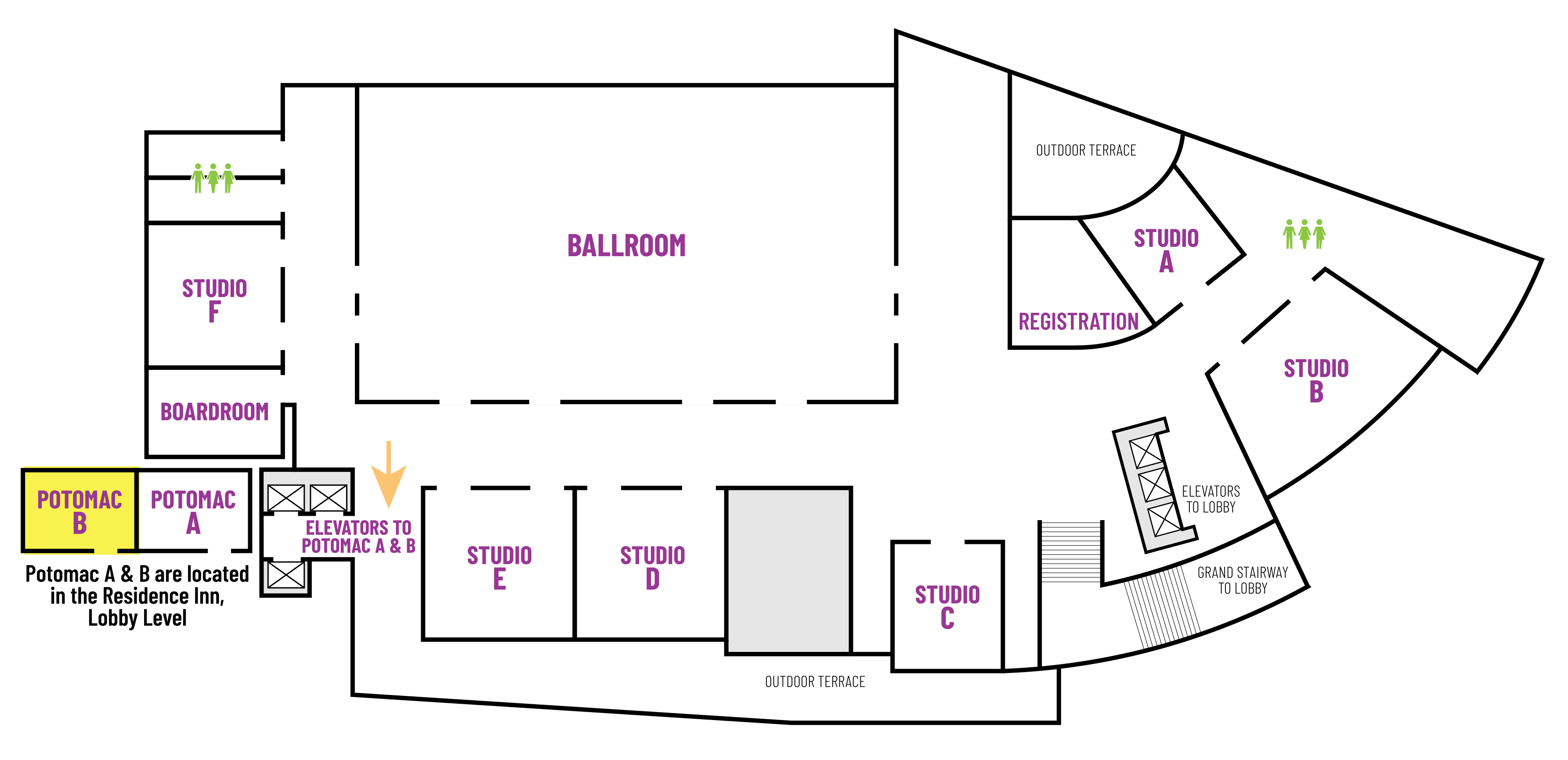
    Potomac B

    Power of PreventionExpanding the HIV prevention workforce is more important than ever: biomedical prevention is advancing rapidly and the HIV workforce is shrinking.

    This institute offers a comprehensive foundation for providers to: 1) identify individuals who may benefit from HIV prevention services; 2) implement high-impact PrEP interventions; and, 3) apply a framework of cultural humility to improve engagement and retention in care.

  • Diverse, Low Barrier MAT Programs: Case Studies for Increasing Access to Prevent Overdose

    Potomac B
    Drug User Health Track

    This presentation will explore the process and findings of this landscape analysis, sharing some key case study videos and highlighting the various creative ways that programs have integrated MAT treatment into existing models even if they do not have a prescribing provider onsite. Participants will become familiarized with the meaning and significance of low barriers services in an MAT setting, and will discuss various ways that MAT programs have been successful in preventing overdose and improving the overall health and wellness of their clients through provision of MAT.

  • Inaugural Year Highlights from the Harm Reduction Services Program: San Diego County’s First Government-Run Syringe Service Program

    Potomac B
    Drug User Health Track

    In April 2024, San Diego County launched its Harm Reduction Services Program (HRSP), the region’s first government-run syringe service initiative. Designed to address the intersecting crises of overdose, HIV, and hepatitis C among people who use drugs, HRSP operates through a mobile delivery model, providing low-barrier, stigma-free services in underserved communities identified through a comprehensive Community Readiness Assessment.

  • Cool Kids Carry Narcan: A Rural Community Model for Equitable Naloxone Access and Overdose Prevention

    Potomac B
    Drug User Health Track

    Cool Kids Carry Narcan is a rural overdose prevention initiative led by Berkshire Harm Reduction, a program of Berkshire Health Systems in western Massachusetts. Designed to address geographic and racial inequities in naloxone access, the project currently installs and maintains 124 public NaloxBoxes while pairing distribution with community training and stigma-reduction campaigns.

  • Lived Experiences of Black Men Who Have Sex with Men in Washington, DC: Survival and Seroadaptation

    Potomac B
    HIV Care and Treatment Track

    Understanding how BMSM, who represent less than 1% of the U.S. population, but account for over one-third of new HIV infections annually, practice seroadaptation can inform new interventions to improve their engagement in HIV services. To this end, we conducted a qualitative study (called the “PhotoUStudy”), which was guided by a conceptual model, the BMSM Intersectional Identity Framework Over the Life Course (BMSM Identity Framework). Thirty-six BMSM who lived in/accessed health services in Washington, D.C., aged 18-65, were recruited into a five-day photovoice activity and follow-up interview.

  • Getting Spicy: Sex Positivity for Older Adults Living with HIV

    Potomac B
    HIV Care and Treatment Track

    This session will explore what it means to communicate with a sex positive lens with older adults living with HIV, with particular attention to language, imagery, and a cross-generational understanding of sexuality. We will then apply those skills and develop some ideas for outreach and communication geared towards the priority population of the attendees.

  • Breaking Barriers, Increasing Safety for Special Populations

    Potomac B
    Drug User Health Track

    In 2022 Victory Programs opened its doors to The Victory Connector, a new drop in space in the Mass and Cass neighborhood. A neighborhood that was already home to methadone clinics, Boston Medical Center (the city hospital), Harm Reduction Providers and two homeless shelters. What could Victory Programs do that was different and meeting an unmet need?

  • Bridging Systems: Integrating HIV and Aging Services to Address Behavioral Health and Social Isolation

    Potomac B
    HIV Care and Treatment Track

    Older adults living with HIV—especially Black gay men aged 50 and over—face compounding challenges including stigma, fragmented care, and under-resourced behavioral health services. This session highlights strategies from the Aging and HIV Institute (A&H), a California-based think tank dedicated to bridging HIV and aging service systems.

  • Leading from the Body: A New Paradigm for Trauma-Informed Leadership

    Potomac B
    Drug User Health Track

    In today’s climate of burnout, fear, and fragmentation, leadership requires more than strategy—it calls for presence, relational courage, and embodiment. Leading from the Body introduces a trauma-informed leadership model rooted in somatic awareness and relational intelligence. This approach recognizes that trauma is not only cognitive—it is emotional, non-verbal, and stored in the nervous system. As such, healing and leadership must begin in the body. This interactive session explores how lived experience and embodied presence shape culture, relationships, and organizational change.

  • SYNCing Integrated Care: Advancing LGBTQ+ Health and HIV Prevention through the CCBHC Model in a Community Behavioral Health Setting

    Potomac B
    LGBTQ Health Track

    Hillcrest Children and Family Center, a community-based behavioral health organization in Washington, DC, implemented the Certified Community Behavioral Health Clinic (CCBHC) model to expand access and reduce disparities among underserved populations. Serving largely Black and LGBTQ+ communities, Hillcrest’s CCBHC initiative provides an integrated platform for behavioral health, primary care, and prevention services. This framework has strengthened culturally responsive care and enabled the agency to leverage programs, including Ryan White–funded HIV prevention and treatment, to advance health equity and justice.

  • Bridging Mental Health Equity and HIV Prevention for LGBTQ+ College Students: A Systematic Review and Public Health Framework for Appalachia

    Potomac B
    LGBTQ Health Track

    LGBTQ+ students in U.S. colleges experience disproportionately high rates of mental health disorders and HIV vulnerability—risks exacerbated in rural and Appalachian regions by structural stigma, provider shortages, and limited-service access. Despite this convergence, few interventions integrate mental health and HIV prevention in campus settings.

  • Transgender Empathy Training: Transforming Understanding Into Action

    Potomac B
    LGBTQ Health Track

    Transgender Empathy Training is an interactive, community-centered educational program designed to cultivate cultural humility, deepen understanding, and expand institutional capacity to support transgender, nonbinary, and gender-expansive people. Grounded in trauma-informed care, intersectional analysis, and lived experience, this training moves beyond basic terminology and policy compliance to build genuine human connection and sustained allyship.

  • LGBTQIA+ Equity in Nursing

    Potomac B
    LGBTQ Health Track

    This presentation shares early findings from ANA\California’s LGBTQIA+ Equity in Nursing initiative, led by Advocacy Institute Fellows Dr. Bri DuBose (2024) and Misty Mandeville (2025). The taskforce—formed in January 2024 and composed of nursing leaders, clinicians, and subject-matter experts—designed a structured assessment to benchmark organizational culture, knowledge, reporting comfort, DEIB infrastructure, and hiring practices related to LGBTQIA+ equity.

Accreditation, Credit, and Support

Information on credits offered to SYNC participants for attending institutes, sessions, and plenaries — live or in-person — is available here.

Commercial Support Acknowledgement

This conference is supported, in part, by independent educational grants from ineligible companies. A full list of supporters is available here. All accredited content has been developed and delivered in accordance with the ACCME Standards for Integrity and Independence and the criteria of Joint Accreditation for Interprofessional Continuing Education™, and is free of commercial bias.