HIV Prevention
Events
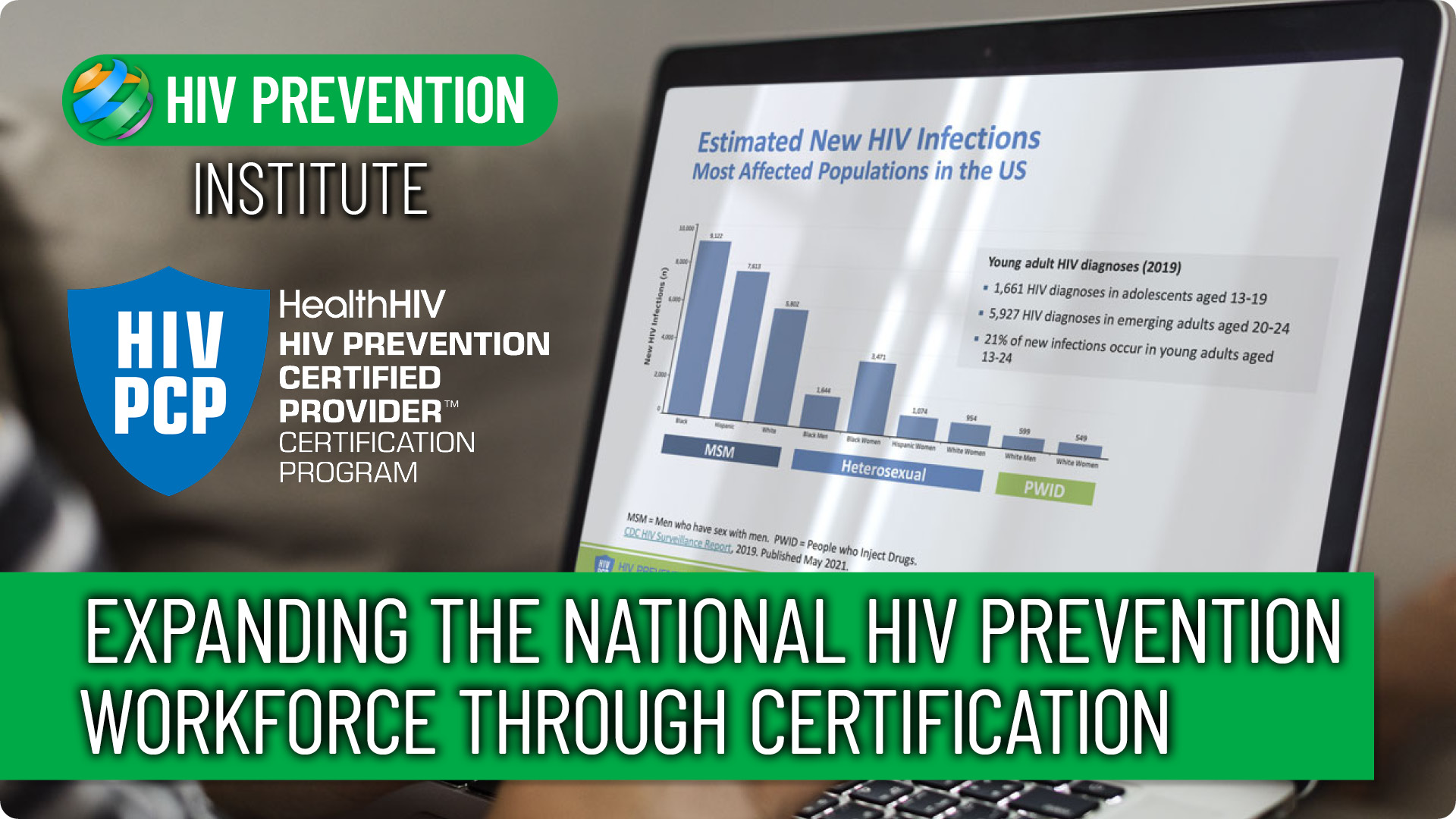
Expanding the National HIV Prevention Workforce through Certification

Expanding the HIV prevention workforce is more important than ever: biomedical prevention is advancing rapidly and the HIV workforce is shrinking.
This institute offers a comprehensive foundation for providers to: 1) identify individuals who may benefit from HIV prevention services; 2) implement high-impact PrEP interventions; and, 3) apply a framework of cultural humility to improve engagement and retention in care.
Elevating the PrEP Navigation Workforce through Certification
While disparities in PrEP uptake and need persist and PrEP demand remains high, experienced PrEP navigation staff are key to realizing the benefits of PrEP.
This institute equips participants with the practical knowledge, communication strategies, and clinical context needed to guide individuals through their PrEP journey.
Responding to Rapid PrEP Need: Integrating Teams, Streamlining Workflows, and Equipping Clinicians
As demand for rapid-start PrEP continues to grow, healthcare teams need practical, scalable models that support timely access while fitting real clinical workflows. This live, in-person institute will focus on the real-world implementation of rapid-start PrEP across clinical and pharmacy settings, with an emphasis on team-based care and operational readiness. Through an interprofessional lens, faculty will explore how clinicians, pharmacists, and care teams can work together to integrate rapid-start PrEP using streamlined workflows, standing orders, lab reflex panels, and clinician-facing tools that support consistent, efficient delivery of care.
Borderless Prevention
This comparative analysis explores HIV prevention, PrEP (pre-exposure prophylaxis), and health equity across two critical border regions: San Diego–Tijuana and Brownsville–Matamoros. These binational corridors reflect unique public health dynamics shaped by migration, resource allocation, stigma, and cross-border collaboration. While San Diego and Brownsville benefit from robust U.S. public health infrastructure, their Mexican counterparts often face limitations in consistent access to HIV testing, PrEP availability, and stigma-free services.
PrEP, PEP & Pleasure: Tools of Sexual Liberation
This interactive presentation explores the intersection of sexual pleasure, HIV prevention, and liberation for communities of color. The Science of Sexuality and Pleasure, it reframes PrEP and PEP not just as biomedical tools, but as instruments of sexual agency, protection, and empowerment. Drawing on the imagery of chains, whips, handcuffs, and doxycycline, we assert that protection and pleasure are not mutually exclusive, but deeply intertwined. Through storytelling, case-based dialogue, and visual metaphors, we invite attendees to challenge conventional narratives that separate safety from desire.
PrEPared RN: Bridging Health Equity Gaps Through Nurse-Delivered PrEP
This session showcases how nurses are transforming HIV prevention in one of the nation’s highest-incidence regions. This innovative, nurse-led model expands access to pre-exposure prophylaxis (PrEP) through standing orders, telehealth, and mobile outreach, allowing same-day initiation of care.
Taking the Test Home: NKY Healths Inclusive Approach to HIV Self Test Access
This presentation offers an in-depth exploration of NKY Health's expansive HIV self-test distribution program, highlighting its multifaceted approach to making test kits readily available throughout the Northern Kentucky community. Our primary goal has been to maximize reach, ensuring these vital resources get into the hands of as many people as possible.
MSM Perspectives on Hypothetical Novel HIV Testing and Linkage Technology in South Carolina
Men who have sex with men (MSM) in the U.S. South face a disproportionate burden of HIV yet remain underserved in traditional prevention and care pathways. Stigma, structural inequities, and limited access to culturally competent services contribute to poor engagement across the HIV care continuum. These barriers are exacerbated by resource-constrained settings such as the rural South.
Self Imposed HIV and LGBTQ Stigma
Stigmatizing ourselves can be the biggest obstacles, in healing ourselves from the harm caused by the STIGMA imposed by those not educated on HIV and LGBTQ issues. The presentation gives a birds-eye view into my experience as a PLWA in the early days. How my life has evolved into a long-term survivor, and how anyone can heal from the STIGMA caused by ignorance.
From Cell to Clinic: Connecting Returning Citizens to HIV Prevention and Care
Imagine a world where every individual, regardless of their past, has access to essential healthcare services and the support they need to thrive. For returning citizens living with HIV, this is not just a dream—it’s a necessity. The Intervention Services Program (ISP), part of the DC Health’s HIV AIDS Hepatitis STD Tuberculosis Administration (HAHSTA), is on a mission to transform this vision into reality.
Reaching Her: Evaluating PrEP Uptake and Engagement Strategies for Cisgender Women in Florida Specialty Clinics
In this presentation, we share results of our outreach efforts to engage cisgender women for HIV prevention services, including PrEP.
Serving with Intention: A Sisterhood Built in Meaningful Involvement
This session will showcase how AIDS United’s Melanated Movement Fund grantees are responding to the needs of aging Black women across the diaspora by implementing innovative stigma-reductive and community-engagement approaches in two distinct communities.
Understanding the Facilitators of and Barriers to Community Engagement Among Faith-Based Organizations in New York City
Black Health’s Outreach Enhancement: Faith Based Organization Program (OEF) collaborates with faith-based organizations across the five boroughs of New York City to provide high impact HIV prevention services in geographical hot spots in communities of color where HIV infections are most heavily concentrated (as defined by the New York City Department of Health and Mental Hygiene (NYCDOHMH).