




SYNC 2026 Agenda
The schedule presented here is subject to change as the agenda is finalized.
19 sessions found.
WEDNESDAY, MARCH 18
THURSDAY, MARCH 19
This schedule is preliminary and subject to change.
Studio C
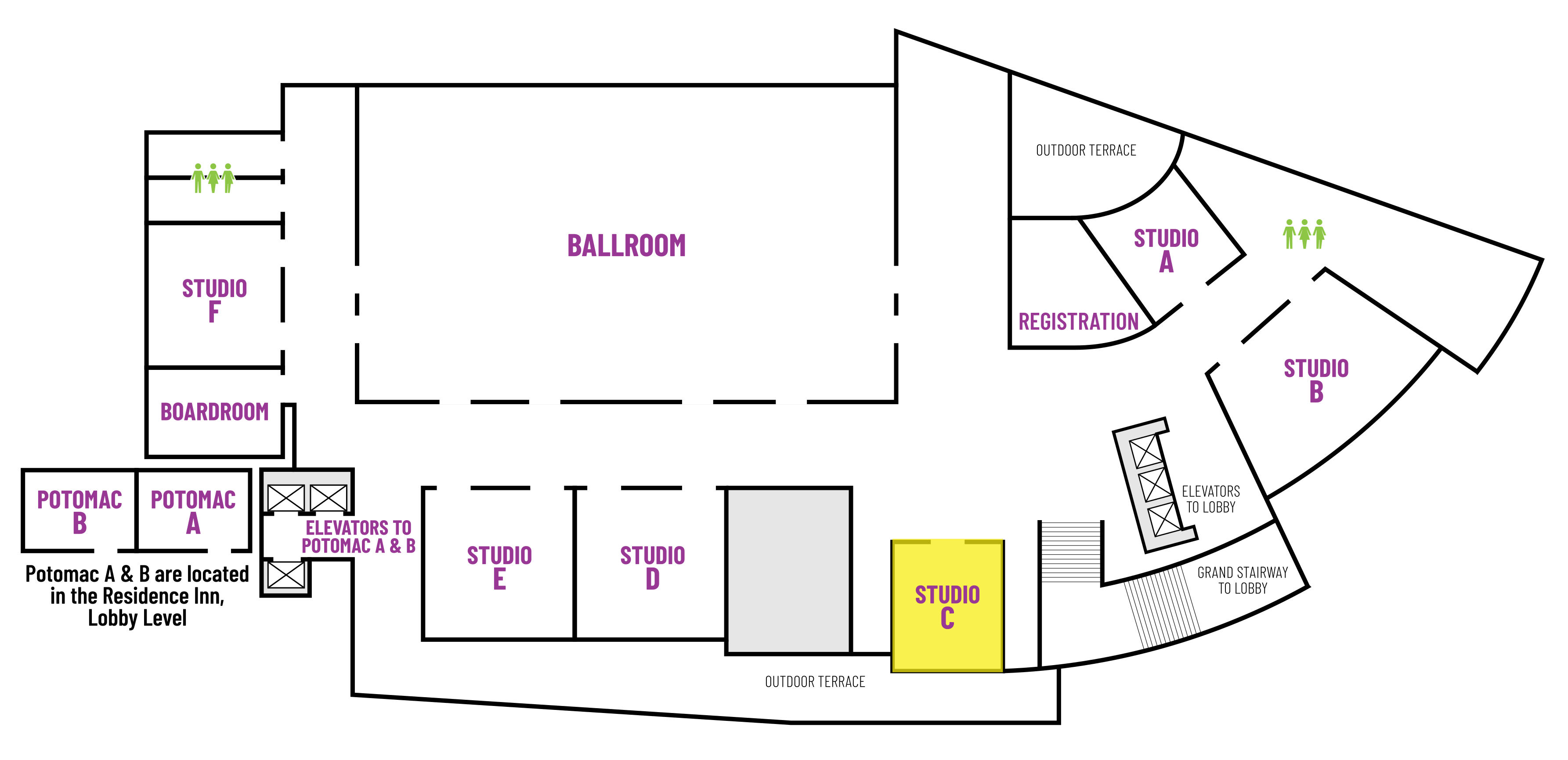
Studio C is the frosted-glass room located next to the staircase.
Sessions at this room
-
-
-
Understanding Social Drivers of Health among People Living with HIV with Unsuppressed Viral Loads Visiting the Emergency Department
Studio CDespite the wide availability of antiretroviral therapy (ART) as an effective treatment option for HIV, a substantial portion of people with HIV (PWH) in the United States remain out of care or inconsistently take their medications, leading to an unsuppressed viral load despite diagnosis—a critical gap that undermines both individual health outcomes and public health objectives.
-
Hartford Employment Initiative: Addressing Critical Employment Gaps for Persons Living with HIV (PLWH)
Studio CThe employment landscape for PLWH in the Hartford Transitional Grant Area (TGA) presents significant challenges. According to the 2022 Statewide Needs Assessment Survey, 54.46% of PLWH were unemployed, with 59.46% unemployment within the TGA. Among respondents, 78% of individuals over 50 lacked access to career and life skills training, limiting their ability to secure stable, fulfilling employment.
-
Testing and Treatment Services for HIV, STIs, and Hepatitis C at Substance Use Treatment Facilities Serving Clients in the Ending the HIV Epidemic Priority Jurisdictions of the U.S.
Studio CThis session presents data from the National Substance Use and Mental Health Services Survey (2023) conducted by the Substance Abuse and Mental Health Services Administration to present the current state of availability of testing and treatment services for HIV, HCV, and STIs.
-
Using Community Health Workers to Overcome Obstacles to Care Engagement as a Southern CBO
Studio CIn this session, participants will learn about the core elements of a community -based syndemic approach to HIV care engagement to enhance capacity to support PLWH throughout the HIV care continuum. This workshop will demonstrate how community health workers improve involvement in comprehensive prevention services.
-
Understanding the Sociocultural Context of HIV Outcomes for Transgender Women of Color Age 50+: A Secondary Analysis of the Transgender Women of Color Initiative Evaluation and Technical Assistance Center (TETAC) Dataset
Studio CRecent data from the U.S estimated that over half (57%) of transgender women (TW), aged 50+, are living with HIV. Findings lacked analysis by age, gender, and race/ethnicity, but found 62% HIV prevalence among Black trans women, suggesting potential HIV disparities for older TW of color. This study focused on HIV outcomes and health services access for TW aged 50 and older, making important contributions to the context of care for this population sub-group, who shoulder disproportionately high HIV prevalence. Findings highlight the critical role of support services in HIV care engagement and the potential for expanded access and intergenerational peer support programs to ameliorate HIV-related disparities based on age and race.
-
Expanding Access, Building Trust: The Syndemic Approach to HIV, HCV, and STI Testing in Marginalized Communities in the Mid-South
Studio CThis presentation explores replicable models of syndemic prevention in underserved Southern communities.
-
My Steps To Care: Adaptation and Pilot-Testing of STC (Steps To Care) Intervention to Improve HIV Health Outcomes among Black Sexual Minority Men, Black Cisgender Women, and Trans Women Living With HIV in Washington DC
Studio CThe purpose of this study is to address the health inequities among key populations living with HIV through a community-based participatory research (CBPR) mixed-methods study designed to adapt and pilot-test STEPS to Care (StC), a CDC-endorsed evidence-based intervention. This intervention consists of three person-centered, evidence-informed strategies to improve retention in HIV care, adherence to antiretroviral therapies, and reduce viral load, which include: Patient Navigation, Care Team Coordination, and HIV Self-Management.
-
Language Justice and Accessibility: Navigating Services for Deaf, Hard of Hearing, Deafblind People Living with HIV
Studio CThis session will provide an overview of how Deaf Community Advocacy Network (Deaf C.A.N.!) Deaf HIV Program addresses the unique challenges of PWLH who are Deaf, Deafblind, and Hard of Hearing navigating Ryan White Services. Through provider assessments and cultural competency training, client assessments and workshops to improve health literacy on HIV prevention and HIV treatment, and workshops for interpreters to increase their understanding of ever growing HIV terminology such as viral load suppression and U=U, Deaf C.A.N.! has expanded their case management services from 7 counties in the Detroit Metropolitan Area to the entire state of Michigan, increased partnerships, and improved client satisfaction
-
Community Mental Health Project
Studio CIn collaboration with Columbia Psychiatry and New York Public Library, the community mental health project was created to address the impact of mental health on the Black and Afro-Latino communities in NYC, especially during and right after the COVID-19 pandemic. The intervention aims to engage the community in discussion around mental health and thus minimize stigma and advocate for innovative strategies to increase the utilization of mental health services within the community.
-
Supporting Syndemic Approaches to Care in a Hostile Political Environment
Studio C This session focuses on the way forward with syndemic approaches to eliminate HIV, viral hepatitis, and related epidemics in a political environment characterized by significantly diminished federal investment in infectious disease prevention and treatment, and in overdose crisis response.
 -
Harm Reduction: Getting It Right
Studio CThis conversation centers harm reduction not as a checklist, but as a justice-rooted framework, a commitment to dignity, autonomy, and survival in a world that often withholds those things. We’ll explore how harm is exacerbated by systems of criminalization, medical neglect, stigma, and control, especially for people who use drugs, sell sex, live with chronic illness, or navigate poverty, racism, and ableism. We’ll interrogate how harm reduction gets watered down, co-opted, or professionalized into meaninglessness, and what it means to reclaim it as a radical, liberatory practice.
-
Participant Perspectives on Contingency Management for Stimulant Use Treatment
Studio CContingency Management (CM) is a behavioral intervention option for stimulant use that involves immediate, tangible rewards to individuals to reinforce positive self-identified behavior change. In 2023, in response to rising rates of stimulant overdose deaths, California became the first state in the U.S. to offer CM as a benefit through public insurance. Having already embraced CM over two decades prior through the Positive Reinforcement Opportunity Project (PROP)—originally designed for men who have sex with men to reduce sexually transmitted infections through reducing methamphetamine use—San Francisco was well positioned to expand this model, and over the last two years expanded CM to more than a dozen programs throughout the city benefitting diverse populations.
-
An Indictment of US Public Health Policy on Pain and Addiction Management
Studio CThis presentation addresses the intersection of issues in health equity and justice, versus health advocacy and policy, to identify and contradict the significant misdirection and fatal errors of science in recent opioid prescribing guidelines of the US CDC and Veterans Administration with a critical review of published clinical and demographic data on safety and effectiveness of prescription opioid analgesic pain relievers.
-
Research to Practice to Capacity Building: Implementing Partner Treatment for Bacterial Vaginosis (BV) in a Public Sexual Health Clinic
Studio CThis presentation will outline the current understanding of BV as a dysbiosis, the role of sexual transmission in pathogenesis, and the recent findings of the Australian StepUp* Trial. Practical suggestions will be offered regarding designing and implementing a policy to provide partner therapy for BV in clinical settings in the United States based on the experience at a walk in public Sexual Health Clinic.
-
I Have Put This Off for Decades; You Remembered Me – Improving Hepatitis C Linkage to Care Across a Health System
Studio CHepatitis C (HCV) is a curable disease, yet many patients remain untreated due to lack of awareness, outdated perceptions, and barriers to care. This project aimed to identify and link untreated HCV RNA-positive individuals to care within a large, not-for-profit health system in Virginia.
-
Doxycycline vs. Benzathine Penicillin G for Treatment of Syphilis: A Retrospective Analysis from a Large Sexual Health Organization
Studio CLimited evidence suggests that doxycycline may be comparable to penicillin for the treatment of syphilis, but perhaps less so for latent stages. A total of 655 individuals were included, 539 who were treated with benzathine PCN G (BPG) and 116 treated with doxycycline. For our primary analysis, we included all RPR titers up to 24 months after treatment for all stages of syphilis treated from April 2022 through September 2023.
-
Leveraging Quality Improvement to Improve HIV Outcomes
Studio CIn recent years, sexually transmitted infections (STI) rates in the United States have risen dramatically, with more than 2.4 million STIs reported in the United States alone (CDC, 2024). STIs can have a profound impact on health, including infertility, neurological and cardiovascular disease, stillbirths, and increased risk of Human Immunodeficiency Virus (HIV). This growing epidemic demands urgent action to enhance the prevention, diagnosis, and treatment of STIs.
-
Responding to Rapid PrEP Need: Integrating Teams, Streamlining Workflows, and Equipping Clinicians
Studio CAs demand for rapid-start PrEP continues to grow, healthcare teams need practical, scalable models that support timely access while fitting real clinical workflows. This live, in-person institute will focus on the real-world implementation of rapid-start PrEP across clinical and pharmacy settings, with an emphasis on team-based care and operational readiness. Through an interprofessional lens, faculty will explore how clinicians, pharmacists, and care teams can work together to integrate rapid-start PrEP using streamlined workflows, standing orders, lab reflex panels, and clinician-facing tools that support consistent, efficient delivery of care.
Accreditation, Credit, and Support
Information on credits offered to SYNC participants for attending institutes, sessions, and plenaries — live or in-person — is available here.
Commercial Support Acknowledgement
This conference is supported, in part, by independent educational grants from ineligible companies. A full list of supporters is available here. All accredited content has been developed and delivered in accordance with the ACCME Standards for Integrity and Independence and the criteria of Joint Accreditation for Interprofessional Continuing Education™, and is free of commercial bias.


