Scaling back HIV and STI federal funds undermines decades of progress made in the public health realm. Domestic HIV and STI Prevention programs aim to provide essential services such as testing, treatment and education, to help decrease transmission of infectious diseases and improve health outcomes in the local communities. The Houston Health Department (HHD) relies mostly on federal grants to support staffing, infrastructure and preventative services. The Partner Services program is especially crucial for contact tracing to prevent further spread of disease by tracking partners of individuals potentially infected with syphilis and HIV. HHD assessed the Partner Services program’s performance levels to determine if uncertainty in receiving federal funds, which potentially contributed to a significant reduction in workforce, had negatively impacted Public Health Follow Up (PHFU) activities.
Having previously reported on clinical outcomes of Adolescents and Young Adults with HIV (AYAHIV) in the Accessing Care Early (ACE) young adult transition program, we present an update, detailing the design and implementation of this multi-dimensional program, the innovations in biomedical and care delivery interventions, as well as programmatic challenges and opportunities as we evolve into a mature transition program. This workshop will use didactics and interactive presentation, case-study, transparent panel discussion and Q&A as participants engage with the ACE program’s multidisciplinary team, including an YAHIV who “came of age” in the program.
With advancements in HIV treatment, individuals living with HIV are now living longer, By 2030, 70% of people living with HIV (PLWH) will be ages 50 and older. But, as PLWH age they face unique challenges, particularly with cognitive health. One major concern is HIV-Associated Neurocognitive Disorder (HAND), a form of cognitive decline more common among PLWH. This presentation will provide a brief overview of HIV care; the signs and risk factors for HAND; similarities and differences between HAND and Alzheimer's disease; and why accurately diagnosing cognitive change in PLWH is so important.
This presentation will explore critical considerations in the management of HIV in the context of pregnancy, focusing on evidence-based practices and clinical guidelines. Divided into three clinically relevant scenarios, the session will address: (1) treatment and monitoring of HIV in pregnant individuals, (2) postnatal management of infants with in utero exposure to HIV, and (3) considerations for HIV-positive parents who plan to breastfeed. Each topic will be anchored by a clinical case, offering participants an opportunity to apply current guidelines. Emphasis will be placed on reducing risk of perinatal HIV transmission, optimizing maternal and infant outcomes, and navigating ethical and cultural factors in decision making. Attendees will leave with practical clinical pearls and an updated understanding of best practices in HIV care during pregnancy and the postpartum period.
The employment landscape for PLWH in the Hartford Transitional Grant Area (TGA) presents significant challenges. According to the 2022 Statewide Needs Assessment Survey, 54.46% of PLWH were unemployed, with 59.46% unemployment within the TGA. Among respondents, 78% of individuals over 50 lacked access to career and life skills training, limiting their ability to secure stable, fulfilling employment.
Sexually Transmitted Infections (STIs) are a growing public health concern, particularly for women and girls, who experience disproportionately high rates and rising incidence. Barriers such as cost, transportation and geographic access, and appointment availability limit access to timely STI care. For those who do access family planning care, integrating STI testing into comprehensive visits can reduce the need for repeat appointments and improve health and wellbeing.
In 2023, in response to rising syphilis rates and persistent disparities in STI outcomes, we launched a free, community-based STI clinic to expand access to testing and treatment. Prior to this, our services were primarily focused on providing PrEP and HIV care to the LGBT population. In 2024 alone, the clinic served 871 patients—69% of whom identified as ethnic minorities, a population disproportionately impacted by barriers to healthcare access, including PrEP.
Herpes simplex virus (HSV) is one of the most common yet misunderstood sexually transmitted infections, often framed through a deficit-based lens emphasizing stigma, fear, and distress. This presentation issues a strengths-based call to action; reimagining HSV prevention, treatment, and care as opportunities to foster resilience, agency, and self-compassion among patients and providers.
Hillcrest Children and Family Center, a community-based behavioral health organization in Washington, DC, implemented the Certified Community Behavioral Health Clinic (CCBHC) model to expand access and reduce disparities among underserved populations. Serving largely Black and LGBTQ+ communities, Hillcrest’s CCBHC initiative provides an integrated platform for behavioral health, primary care, and prevention services. This framework has strengthened culturally responsive care and enabled the agency to leverage programs, including Ryan White–funded HIV prevention and treatment, to advance health equity and justice.
LGBTQ+ students in U.S. colleges experience disproportionately high rates of mental health disorders and HIV vulnerability—risks exacerbated in rural and Appalachian regions by structural stigma, provider shortages, and limited-service access. Despite this convergence, few interventions integrate mental health and HIV prevention in campus settings.
Despite the wide availability of antiretroviral therapy (ART) as an effective treatment option for HIV, a substantial portion of people with HIV (PWH) in the United States remain out of care or inconsistently take their medications, leading to an unsuppressed viral load despite diagnosis—a critical gap that undermines both individual health outcomes and public health objectives.
In 2022 in Alabama, youth age 13-24 made up the majority of chlamydia and gonorrhea cases, and nearly a quarter of new HIV diagnoses, illustrating the need for STI prevention efforts aimed at this population. Incarcerated youth represent a group more vulnerable to HIV/STI infection than youth in general. The UAB Family Clinic has partnered with the Alabama Department of Youth Services to provide HIV/STI education confidential HIV testing to youth held in detention facilities across the state of Alabama. In 2024, the UAB Family Clinic provided comprehensive HIV/STI education to approximately 350 youth across 3 sites, 268 of whom opted to be tested for HIV.
Transgender Empathy Training is an interactive, community-centered educational program designed to cultivate cultural humility, deepen understanding, and expand institutional capacity to support transgender, nonbinary, and gender-expansive people. Grounded in trauma-informed care, intersectional analysis, and lived experience, this training moves beyond basic terminology and policy compliance to build genuine human connection and sustained allyship.
This presentation examines how housing precarity and systemic bias shape clinical encounters with queer adolescents of color. Drawing from direct clinical practice, supervision, and education within urban community settings, it highlights the ways traditional care models often replicate inequities through rigid policies, pathologizing language, and a lack of intersectional awareness.
The San Francisco Principles 2020 builds on the 1983 Denver Principles to highlight the critical needs of long-term HIV/AIDS survivors (LTS) as they age with HIV. This important statement brings attention to the linked problems of aging, unfair health access, and how systems often ignore marginalized people within the LTS community.
This session will showcase how AIDS United’s Melanated Movement Fund grantees are responding to the needs of aging Black women across the diaspora by implementing innovative stigma-reductive and community-engagement approaches in two distinct communities.
This interactive session explores the intersection of aging, race, gender identity, and sexuality through the lens of Black LGBTQ+/SGL individuals living with HIV. Drawing from lived experiences and frameworks like Aging While Black by Raymond Jetson, the session redefines aging not as decline, but as a site for power, healing, and systemic transformation.
This presentation shares early findings from ANA\California’s LGBTQIA+ Equity in Nursing initiative, led by Advocacy Institute Fellows Dr. Bri DuBose (2024) and Misty Mandeville (2025). The taskforce—formed in January 2024 and composed of nursing leaders, clinicians, and subject-matter experts—designed a structured assessment to benchmark organizational culture, knowledge, reporting comfort, DEIB infrastructure, and hiring practices related to LGBTQIA+ equity.
In this transformative session, we will delve into the powerful potential of long-acting injectable (LAI) strategies to not only prevent and treat HIV but to foster deeper, more meaningful healthcare engagement. With a focus on the tangible and intangible benefits of LAI therapy, this session will equip healthcare providers with practical insights and tools to optimize patient care and health outcomes. Participants will explore the multidimensional benefits of LAI therapy, highlighting how regular clinic visits can strengthen patient-provider relationships, enhance overall well-being, and create opportunities for broader health interventions.
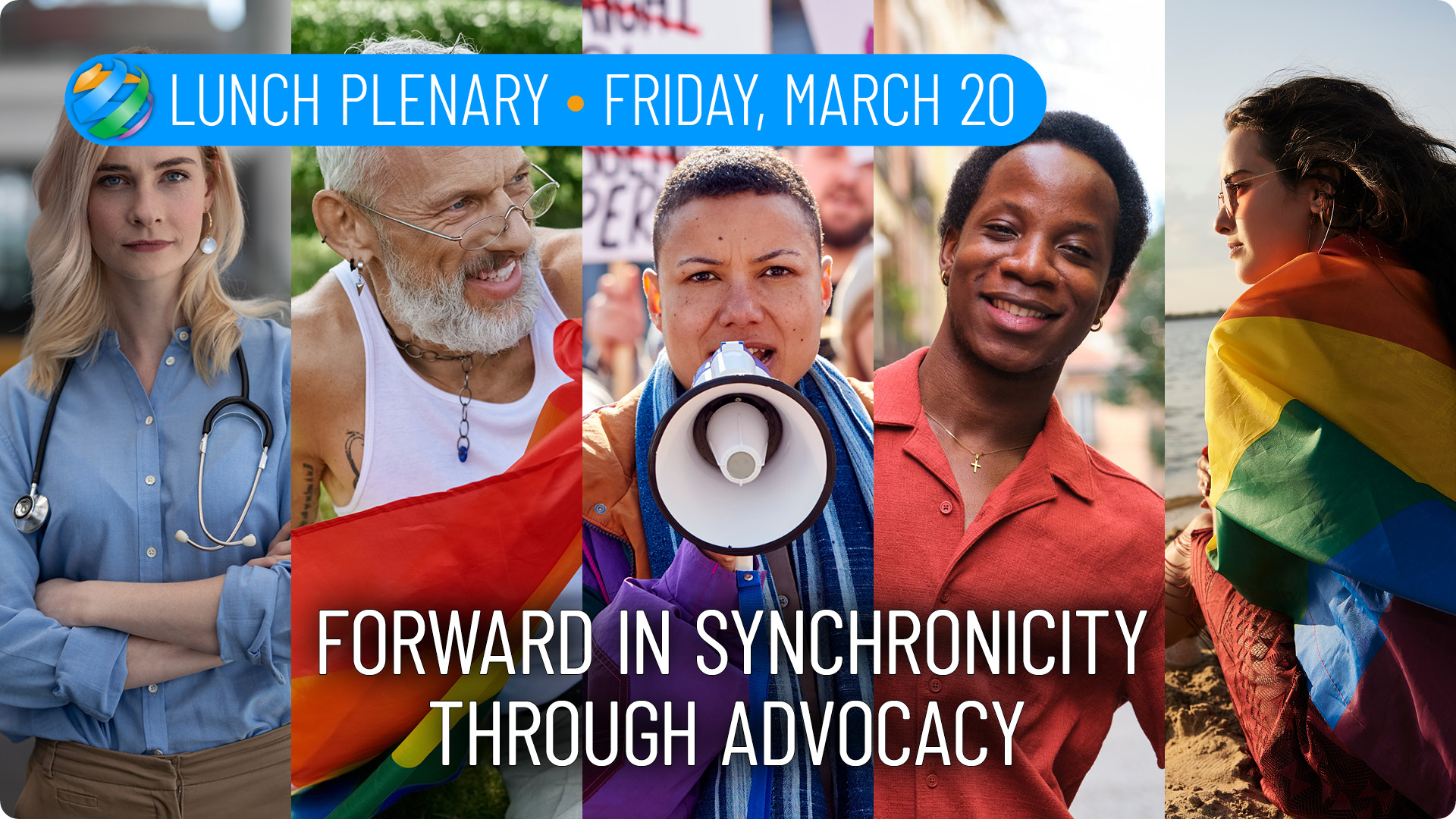
Meet the challenges of today's policy landscape with actionable strategies for igniting and sustaining change. This closing plenary session will examine how advocacy at different levels of the healthcare and prevention continuum can better move in concert together. This plenary session will engage participants in advocacy across HIV, HCV, STIs, Drug User and LGBTQ Health, Immunocompromised Communities, and Health Equity, and closes SYNC 2026 with a clear call to action as we move Forward in SYNChronicity through advocacy.
Information on credits offered to SYNC participants for attending institutes, sessions, and plenaries — live or in-person — is available here.
Commercial Support Acknowledgement
This conference is supported, in part, by independent educational grants from ineligible companies. A full list of supporters is available here. All accredited content has been developed and delivered in accordance with the ACCME Standards for Integrity and Independence and the criteria of Joint Accreditation for Interprofessional Continuing Education™, and is free of commercial bias.
POZ
ChemBio
We have received reports that companies are reaching out to sell SYNChronicity Conference attendee lists and other potential services. This is a scam and these companies are not affiliated with SYNChronicity, HealthHIV, HealthHCV, or the National Coalition for LGBTQ Health. Do not engage with them. Please contact us directly with any questions.




 Scaling back HIV and STI federal funds undermines decades of progress made in the public health realm. Domestic HIV and STI Prevention programs aim to provide essential services such as testing, treatment and education, to help decrease transmission of infectious diseases and improve health outcomes in the local communities. The Houston Health Department (HHD) relies mostly on federal grants to support staffing, infrastructure and preventative services. The Partner Services program is especially crucial for contact tracing to prevent further spread of disease by tracking partners of individuals potentially infected with syphilis and HIV. HHD assessed the Partner Services program’s performance levels to determine if uncertainty in receiving federal funds, which potentially contributed to a significant reduction in workforce, had negatively impacted Public Health Follow Up (PHFU) activities.